Histórias
Do silêncio à responsabilização: combatendo a desigualdade menstrual no Paquistão
O que parece ser uma questão fiscal também é uma história sobre quem pode permanecer na escola, transitar com segurança pela vida pública e gerenciar sua saúde com dignidade.
Em um país onde a menstruação é cercada por estigma, discriminação e silêncio, um sistema tributário que trata produtos menstruais como bens de luxo pode permanecer inquestionável por anos, enquanto milhões vivem sem acesso e enfrentam barreiras à educação, saúde e autonomia corporal.
No Paquistão, os produtos de higiene menstrual têm sido historicamente classificados como bens não essenciais, o que os sujeita a várias camadas de impostos e taxas que aumentam significativamente seu custo. Para cerca de 881 mil pessoas da população, esses produtos continuam fora de alcance. Como resultado, mulheres e meninas muitas vezes recorrem a panos ou materiais improvisados, às vezes sem acesso a água potável ou instalações sanitárias seguras, o que aumenta o risco de infecções e outras complicações de saúde.
“Crescendo com cinco irmãs, não tínhamos suprimentos suficientes para gerenciar nossos períodos com segurança, então tínhamos que usar lençóis de pano e, muitas vezes, trapos. Muitas vezes me fazia pensar que se eu, uma pessoa que tem o privilégio de ter um teto e acesso à educação escolar, luta para ter períodos seguros, como as pessoas cujas casas são inundadas a cada monção cuidam de seus períodos?”, compartilha Bushra Mahnoor, co-fundadora da Mahwari Justice, uma organização feminista, de base e liderada por estudantes que trabalha para garantir o acesso a períodos seguros, especialmente durante desastres e emergências.
Em setembro de 2025, um desafio legal trouxe essa questão para o sistema judicial do Paquistão. A advogada Mahnoor Omer entrou com uma petição de interesse público perante o Tribunal Superior de Lahore (Sede de Rawalpindi), argumentando que a tributação de produtos menstruais viola os direitos constitucionais à dignidade, igualdade e acesso a necessidades básicas. A petição desafia especificamente a classificação de produtos menstruais como bens não essenciais e pede a remoção de impostos que os tornam inacessíveis. Mahwari Justice (“Mahwari” significa menstruação em urdu) desempenhou um papel central em apoiar e expandir esse esforço.
Uma menstruação não é um pequeno inconveniente quando impede uma menina de ir à escola mês após mês. No Paquistão, o UNICEF estima que uma em cada cinco meninas perde aulas devido ao seu ciclo menstrual, o que resulta em pelo menos um ano de educação perdida. As meninas enfrentam bullying, são frequentemente consideradas impuras e podem ser desencorajadas ou até punidas por falar sobre menstruação. Riscos à saúde, incluindo infecções causadas por materiais inadequados, são comuns. Com o tempo, essas barreiras reforçam ciclos de desigualdade e limitam as oportunidades futuras das meninas.
“A menstruação está profundamente ligada ao casamento infantil e é uma das principais razões pelas quais as meninas perdem aulas, especialmente porque não há banheiros seguros ou água potável”, explica Mahnoor. Em situações de desastre, a situação pode se tornar ainda mais grave. “Já vi pessoas colocando cinzas de madeira de fogões em um pedaço de pano para usar como absorvente. Também já vi pessoas usando folhas, areia e lama dentro de panos para gerenciar seus períodos. Nos piores casos durante desastres, várias mulheres precisam usar o mesmo pano uma após a outra porque não há mais nada disponível”, acrescenta Mahnoor.
Juntas, essas realidades tornam o caso judicial sobre muito mais do que tributação. Ele desafia um sistema mais amplo no qual a saúde menstrual tem sido ignorada por muito tempo. Sem produtos, água, privacidade e informações precisas, a menstruação se torna uma barreira para a educação, saúde, mobilidade e dignidade. Mesmo sem uma decisão judicial ainda, o caso já começou a mudar a forma como a menstruação é discutida no Paquistão, transformando-a de uma questão privada para uma questão de responsabilidade pública e debate público aberto.
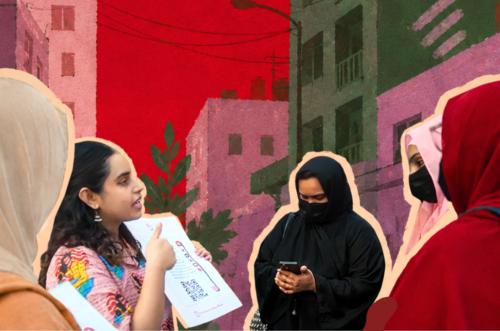
Assim que a petição chegou aos tribunais, a Mahwari Justice mobilizou sua rede de voluntários e plataforma para levar a questão para além dos espaços legais e para a conversa pública. Seus voluntários levaram a campanha para bazares e shoppings, conversando diretamente com as pessoas sobre por que a taxação menstrual é uma questão de direitos e convidando-as a assinar uma petição pública através de códigos QR. Essa abordagem permitiu que a campanha alcançasse pessoas de diferentes idades e origens, incluindo aquelas com menor probabilidade de encontrá-la online. Até o momento, a petição reuniu mais de 10.200 assinaturas, contribuindo para o aumento da cobertura da mídia e do debate público em torno da pobreza menstrual e da igualdade de gênero.
A defesa jurídica tem sido combinada com um trabalho sustentado de base. Sessenta partes interessadas de organizações de defesa de pessoas com deficiência, clínicas, abrigos e grupos educacionais se envolveram na campanha. A organização realizou entrevistas e grupos focais com pessoas menstruadas com deficiência auditiva e visual e cocriou recursos inclusivos com pessoas com deficiência. Por meio de 18 sessões de conscientização comunitária em Sindh e Punjab, eles alcançaram 1.678 meninas e mulheres com informações sobre biologia menstrual, uso de produtos e redução do estigma, ao mesmo tempo em que treinaram uma rede de 20 educadores de pares para liderar conversas baseadas em direitos em suas comunidades.
“Estamos trabalhando agora em diálogos intergeracionais entre pais e seus filhos para garantir que essas conversas aconteçam e que o silêncio oculto, mesmo dentro da família, seja reduzido. As pessoas finalmente estão se tornando mais abertas e compreensivas”, disse Mahnoor.
Este progresso foi fortalecido através da iniciativa Sang pour Sang Uni.e.s pour la Dignité, um programa global que apoia organizações feministas que trabalham para promover a saúde e a dignidade menstrual. Com este apoio, a Mahwari Justice tem sido capaz de expandir seu trabalho, combinando advocacia legal com engajamento comunitário, fortalecendo sua base de evidências e alcançando mais comunidades.
Juntos, esses esforços apontam para uma mudança mais ampla: a discriminação menstrual é cada vez mais reconhecida não como um problema isolado, mas como parte de um sistema que molda o acesso à saúde, educação, igualdade de gênero e justiça econômica. O caso em questão, combinado com a mobilização popular, demonstra como a ação feminista coordenada pode desafiar normas arraigadas, influenciar o discurso público e lançar as bases para a mudança de políticas.
Mesmo com o caso continuando nos tribunais do Paquistão, seu impacto já é visível. Ao trazer a menstruação para o debate constitucional, este movimento está ajudando a redefini-la, não como um fardo privado, mas como uma responsabilidade pública.