Resources
Getting UN80 right: protecting mandates while improving coordination
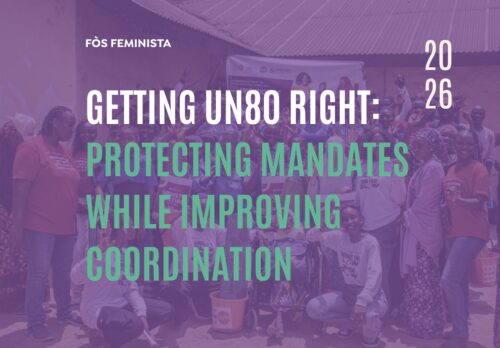
In 2025, as the United Nations marks its 80th anniversary, the Secretary-General launched the UN80 Initiative to address a severe liquidity crisis and improve system-wide efficiency. Among the proposed reforms is the merger of UNFPA and UN Women, presented as a means to streamline operations and reduce duplication. This report examines that proposal and concludes it should be rejected. Rather than strengthening institutional capacity, consolidation would weaken sexual and reproductive health and rights (SRHR) programming, dilute gender equality mandates, and dismantle specialized infrastructure that has taken three decades to build – at a moment when both agendas face unprecedented global rollback.
The process underpinning the merger is fundamentally flawed. It advances a predetermined structural solution before diagnosing what is not working, directly contradicting a 2023 independent expert review that recommended strengthening both agencies. Analysis shows that only 20–30 percent of UNFPA and UN Women’s work overlaps, while the majority of each mandate is distinct. The proposal also rests on faulty assumptions: that the liquidity crisis stems from duplication rather than chronic non-payment of assessed contributions; that SRHR and gender equality are niche issues rather than central to development and human rights; and that consolidation guarantees better coordination, when evidence shows coordination depends on clarity of roles and accountability, not institutional structure. The selective targeting of these two agencies, both operating in politically contested areas, indicates this is not a neutral efficiency exercise.
The stakes are immediate. Each year, 287,000 women die from preventable maternal complications, half in humanitarian settings where UNFPA provides the only coordinated response. An estimated 259 million women lack access to modern contraception. Progress toward gender equality is reversing globally. This report details the government partnerships, technical support mechanisms, and service delivery infrastructure that would be lost, and examines what it means when member states vote for SRHR commitments while supporting budget mechanisms that dismantle implementation capacity. It calls on member states to reject the proposed merger, address the liquidity crisis by paying assessed contributions in full, and replace merger logic with proven coordination solutions that protect specialized mandates rather than eliminate them.